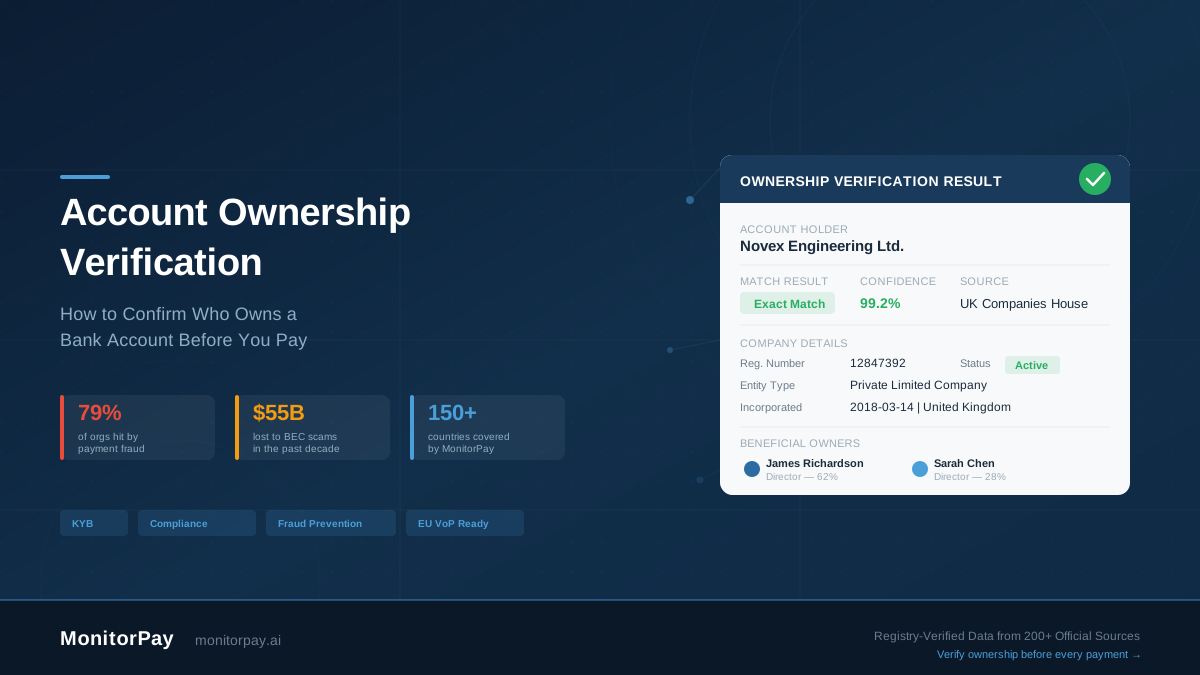
Account Ownership Verification: How to Confirm Who Owns a Bank Account Before You Pay
Learn how account ownership verification works, why IBAN checks alone won’t protect you from payment fraud, and how to verify the legal owner of any bank account using registry and banking data.
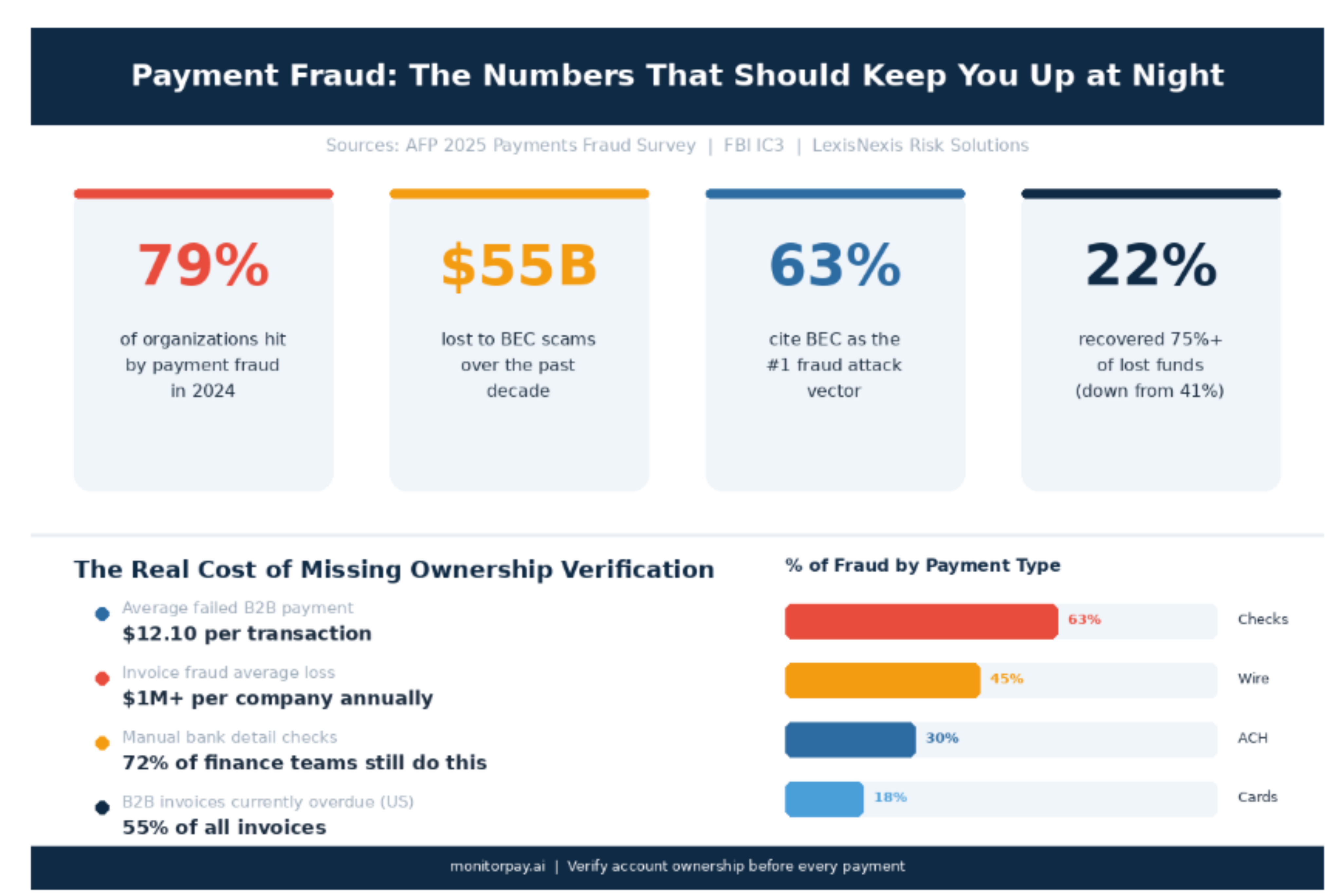
79% of organizations were victims of payment fraud in 2024. Business email compromise alone has cost companies $55 billion over the past decade. The common thread? Payments sent to accounts that were never verified for ownership.
You validated the IBAN. The format checked out. The bank code matched. Then the money disappeared into a mule account.
This is the gap between format validation and ownership verification. One checks if an account could exist. The other confirms who actually owns it.
This guide breaks down what account ownership verification is, how it works, which data sources matter, and how to build it into your payment workflow before fraud does it for you.
What Is Account Ownership Verification?
Account ownership verification is the process of confirming the legal owner of a bank account before you send money to it. It answers one question: does this account actually belong to the person or company you think you’re paying?
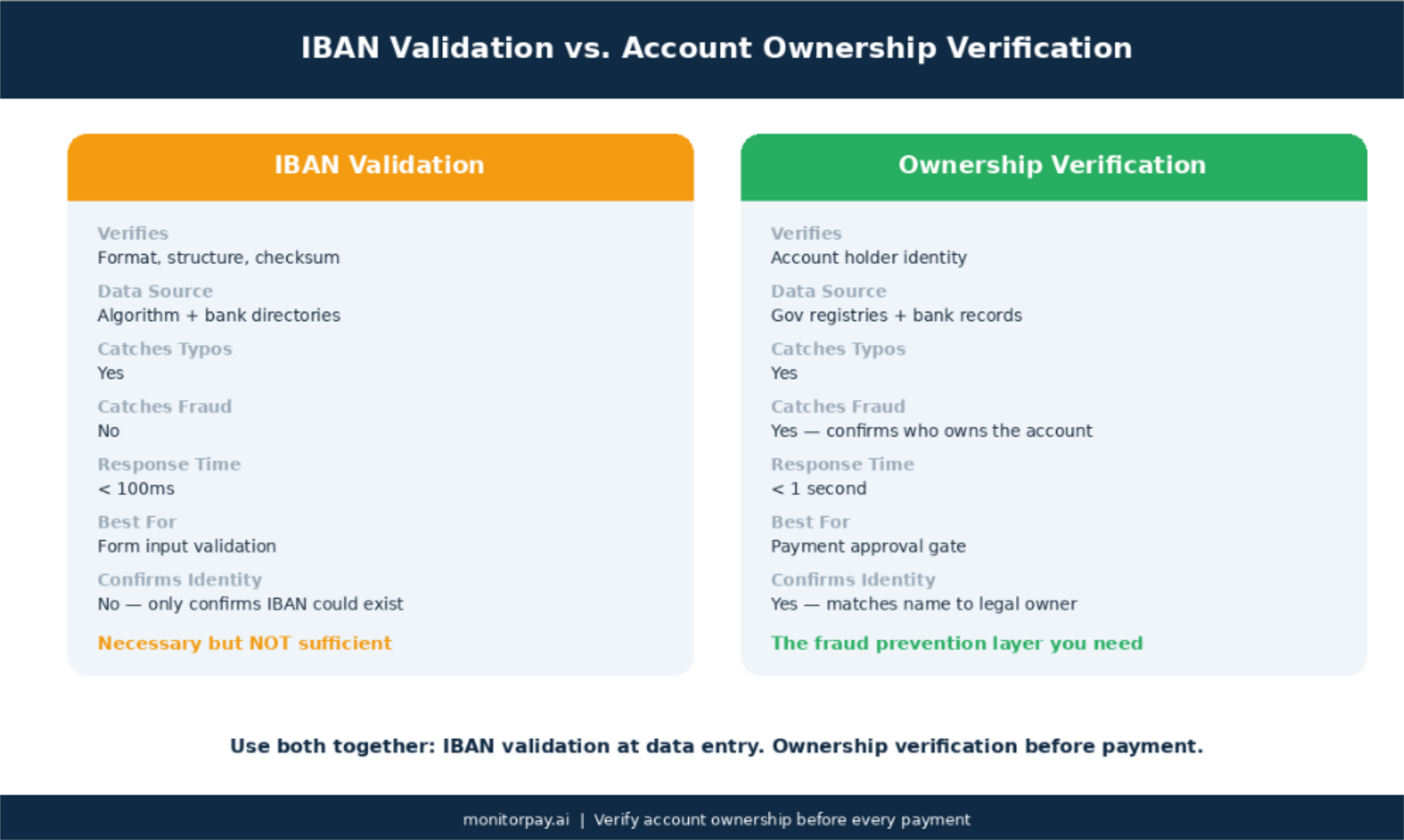
Unlike basic IBAN validation (which checks format and structure), ownership verification cross-references the account holder’s identity against authoritative sources. These include government business registries, banking partners, and open banking APIs.
A complete ownership check typically returns:
- Verified account holder name – the legal name registered to the account
- Account type – personal or business
- Match result – exact match, partial match, or mismatch
- Verification source – official registry, banking partner, or open banking
- Timestamp and reference – for audit trail and compliance records
The goal is simple. Confirm the identity behind the account before money moves. Not after.
Why Account Ownership Verification Matters in 2026
Three forces are converging to make ownership verification non-negotiable for any company processing B2B payments.
1. Payment Fraud Is Getting Worse
The AFP 2025 Payments Fraud and Control Survey found that 79% of organizations experienced attempted or actual payment fraud in 2024. Business email compromise (BEC) remains the top attack vector, with 63% of respondents citing it as the primary threat. Wire transfers have overtaken ACH credits as the most targeted payment type for BEC scams.
The attack playbook is straightforward. A fraudster impersonates a vendor. Sends an invoice with “updated” bank details. The IBAN is valid. The bank exists. But the account belongs to a mule, not your supplier. Without ownership verification, there is no way to catch this before the wire clears.
2. EU Verification of Payee (VoP) Is Now Mandatory
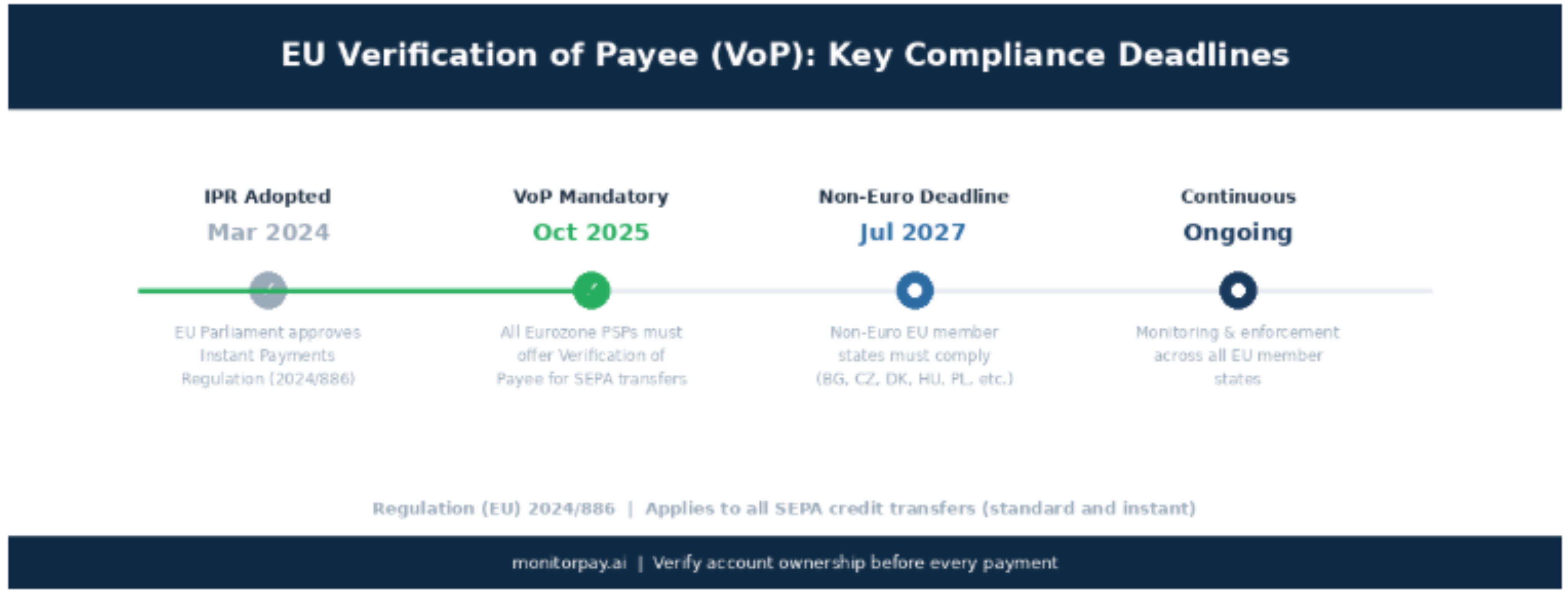
As of October 9, 2025, the EU Instant Payments Regulation (EU 2024/886) requires all Eurozone payment service providers to offer Verification of Payee. This means PSPs must check that the payee’s name matches the IBAN before executing any SEPA credit transfer, whether standard or instant.
The key dates:
- October 9, 2025 – mandatory for all Eurozone PSPs (banks, EMIs, payment institutions)
- July 9, 2027 – mandatory for non-Euro EU member states
VoP responses include: Match, Close Match, No Match, or Unable to Verify. The payer then decides whether to proceed. For corporate treasury teams, this creates both an obligation and an opportunity to build ownership verification into payment approval workflows.
3. Recovery Rates Are Dropping
Even when fraud is caught, getting money back is harder than ever. In 2024, only 22% of organizations recovered 75% or more of funds lost to payment fraud. That is down from 41% the year before. The economics are clear: prevention is cheaper than recovery.
How Account Ownership Verification Works
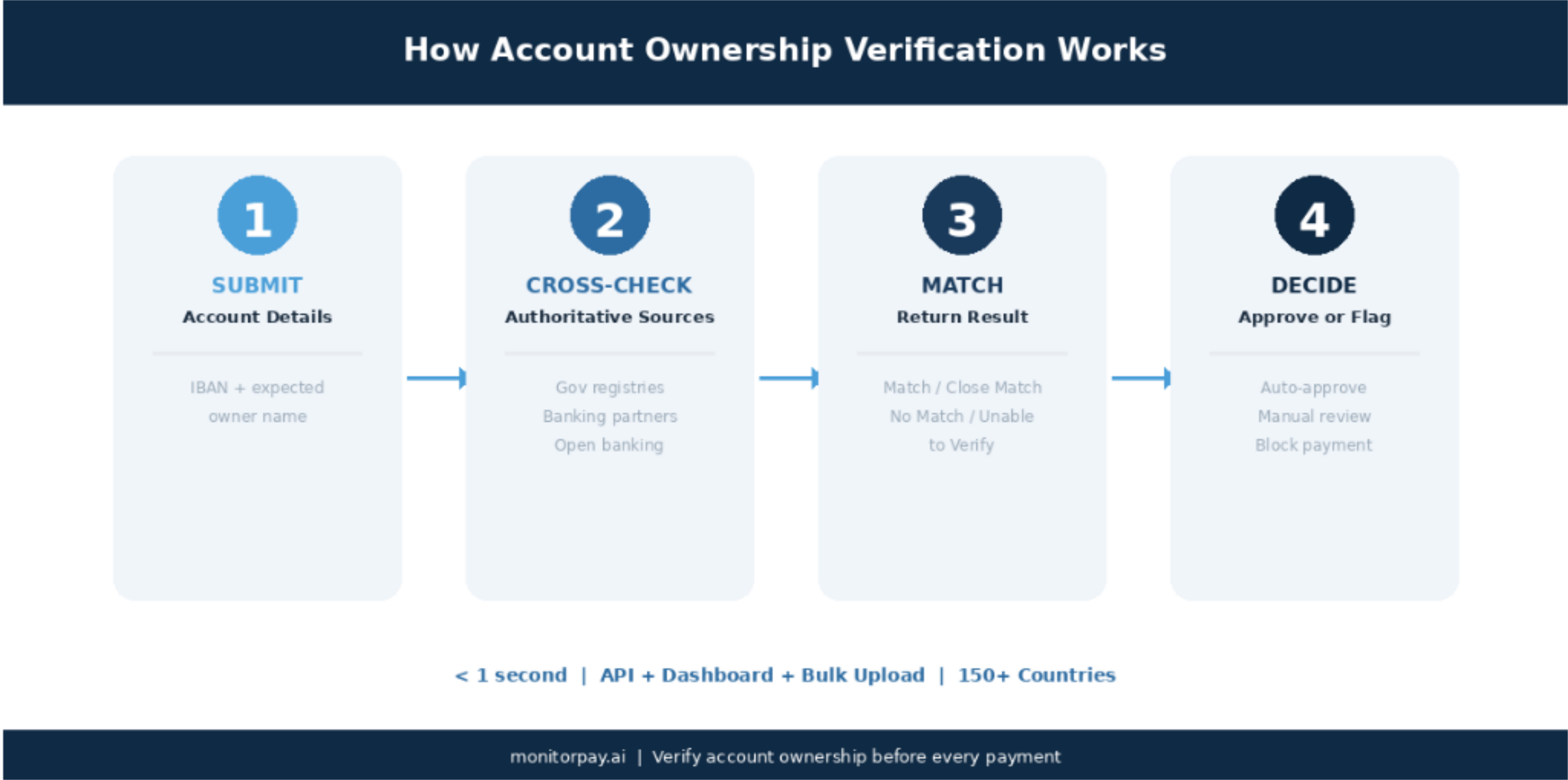
The process varies depending on the data source and verification method. But the core workflow follows four steps.
Step 1: Submit Account Details
You provide the IBAN (or local account number) and the expected account holder name. This can happen via API call, dashboard lookup, or bulk file upload.
Step 2: Cross-Reference Against Authoritative Sources
The verification provider checks the submitted details against one or more data sources. These include government business registries (for company accounts), banking partners (for direct account confirmation), and open banking APIs (for real-time bank data access).
Step 3: Return Match Result
The system returns a structured response:
| Result | What It Means |
| Match | Account holder name matches the expected name exactly. |
| Close Match | Minor discrepancy detected (e.g., typo, abbreviation, swapped order). Review recommended. |
| No Match | The account belongs to a different person or entity. Do not proceed without investigation. |
| Unable to Verify | Data source unavailable or insufficient information. Manual review required. |
Step 4: Decide and Document
Based on the result, your team approves, flags, or blocks the payment. Every verification is logged with a timestamp, source reference, and match score for audit purposes.
Key Data Sources for Verifying Account Ownership
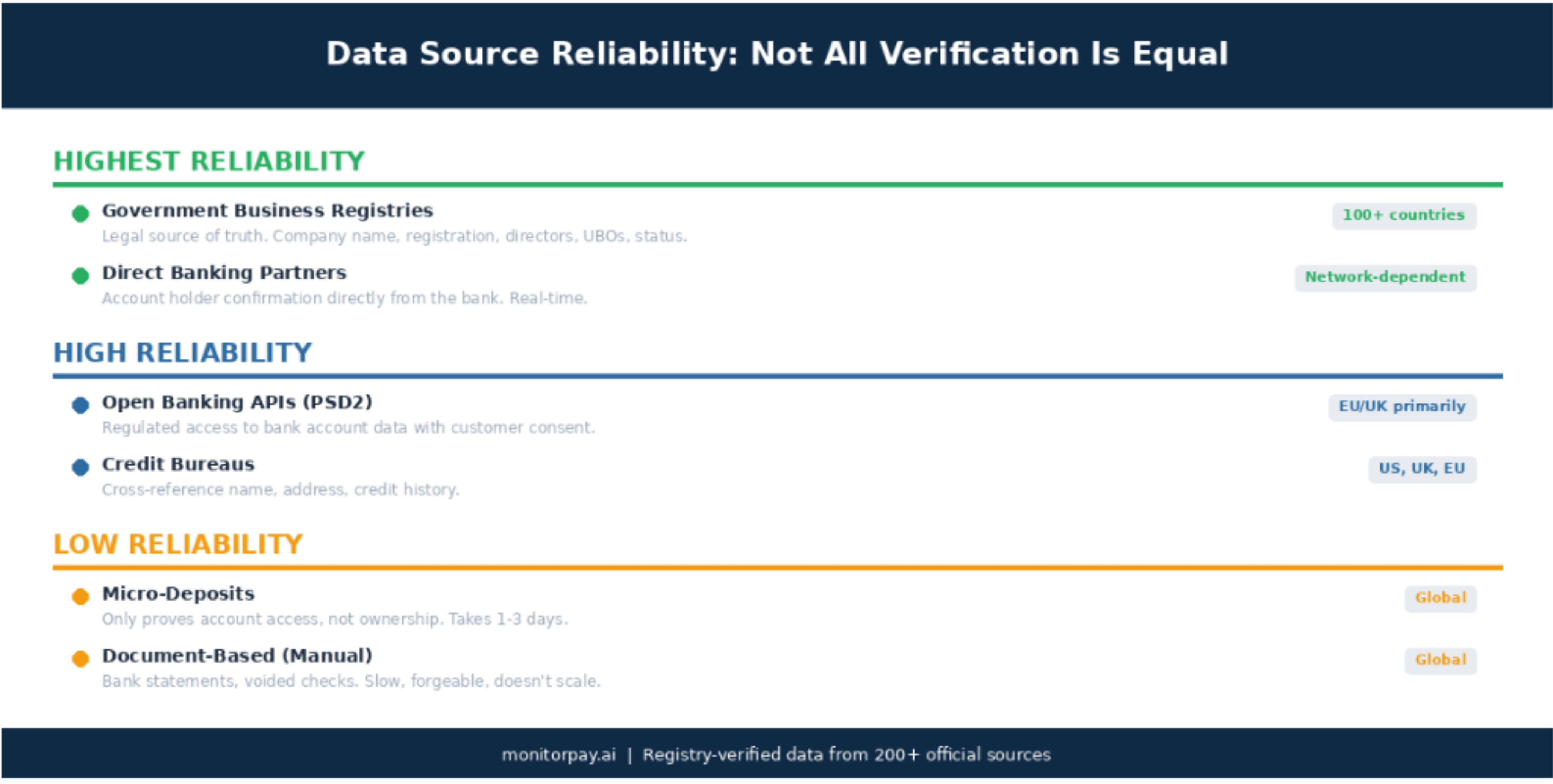
Not all verification is created equal. The quality of the result depends entirely on the quality of the source. Here is how the major data source categories compare.
| Data Source | What It Verifies | Coverage | Reliability |
| Government Registries | Legal company name, registration number, address, status, directors, UBOs | 100+ countries | Highest. Primary source of legal truth. |
| Banking Partners | Account holder name, account status, account type | Varies by bank network | High for direct connections. |
| Open Banking APIs | Account holder name, account number, balance (with consent) | EU/UK (PSD2), expanding globally | High. Regulated access. |
| Credit Bureaus | Name, address, credit history cross-reference | Primarily US, UK, EU | Medium. Secondary source. |
| Micro-Deposits | Account exists and is accessible | Global (any bank account) | Low. Only proves access, not ownership. |
The gold standard is registry-verified data. Government business registries are the legal source of truth for company ownership. They confirm who legally owns and controls an entity. When you combine registry data with direct banking verification, you get the strongest possible proof of account ownership.
Account Ownership Verification Methods Compared
There are several approaches to verifying who owns a bank account. Each has trade-offs in speed, accuracy, coverage, and fraud prevention capability.
| Method | Speed | Fraud Prevention | Coverage | Best For |
| Registry-Based | < 1 second | Highest | 100+ countries | B2B payments, KYB, vendor onboarding |
| Open Banking | < 1 second | High | EU/UK primarily | Consumer payments, account linking |
| Direct Bank | 1-3 seconds | High | Depends on bank network | Large transfers, high-value B2B |
| Document-Based | Hours to days | Medium | Global | Manual onboarding, legacy processes |
| Micro-Deposits | 1-3 business days | Low | Global | Consumer account linking only |
For enterprise B2B payments, registry-based verification combined with banking confirmation provides the strongest assurance. Micro-deposits and document-based methods are legacy approaches that don’t scale and don’t prevent fraud in real time.
Use Cases: Who Needs Account Ownership Verification?
- Finance and Treasury Teams
Treasury teams process hundreds or thousands of payments per month. A single misdirected wire can cost six figures. Ownership verification acts as the final gate before funds leave. It catches vendor impersonation, changed bank details, and internal data entry errors before they become losses. - Compliance and Risk Officers
KYB regulations require companies to verify the identity and ownership structure of their business counterparts. Account ownership verification confirms that the entity behind a bank account matches the entity in your compliance records. This is critical for AML, sanctions screening, and ongoing due diligence. - Vendor and Supplier Onboarding
The onboarding stage is where bad data enters your system. If a vendor submits bank details that don’t match their registered legal name, you want to know before the first payment, not after the first fraud incident. Automated ownership checks at onboarding eliminate this risk. - Marketplace and Platform Payouts
Platforms paying sellers, freelancers, or service providers across multiple countries need to verify that each recipient account belongs to the right person. At scale, manual verification is impossible. API-driven ownership checks make this automated and auditable. - Payment Service Providers and Fintechs
With VoP now mandatory in the Eurozone, PSPs must verify payee identity before executing transfers. Beyond compliance, ownership verification reduces failed payments, lowers fraud exposure, and builds trust with end users.
What to Look for in an Account Ownership Verification Provider
Not every provider offers the same depth of verification. Here is what separates basic name-matching from enterprise-grade ownership confirmation.
- Data Source Quality
The most important factor. Ask: where does the ownership data come from? Providers that source directly from government registries and banking partners deliver higher accuracy than those relying on aggregated or scraped data. Registry data is the legal source of truth. Everything else is a proxy. - Global Coverage
If you operate across borders, your provider must cover every country where you send payments. Look for coverage in 100+ countries with data sourced from local registries and financial institutions, not just a handful of European markets. - Real-Time API
Ownership verification needs to happen in your payment workflow, not as a batch job after the fact. Look for sub-second API response times, REST architecture, and structured JSON responses that integrate directly into your ERP, treasury system, or payment platform. - Enriched Data Beyond Name Matching
The best providers return more than a match/no-match. Look for: company registration details, legal entity type, incorporation date, company status (active/dissolved), director and UBO information, and group structure. This context lets your team make informed decisions, not just binary ones. - Audit Trail and Compliance
Every verification should be logged with a timestamp, source reference, match score, and unique ID. This is essential for regulatory compliance, internal audit, and dispute resolution. Providers that store this data securely and make it exportable save your compliance team significant manual effort. - Pricing Transparency
Per-check pricing with volume discounts is the standard. Avoid providers with minimum commitments, setup fees, or opaque bundling. You should be able to start verifying immediately and scale costs with usage.
How MonitorPay Verifies Account Ownership Across 150+ Countries
MonitorPay provides account ownership verification as part of a unified payment verification infrastructure. The platform connects directly to government registries, banking partners, and financial data sources across 150+ countries to confirm who legally owns a bank account before you pay.
What MonitorPay Returns
When you submit an account for ownership verification, MonitorPay returns a complete entity profile:
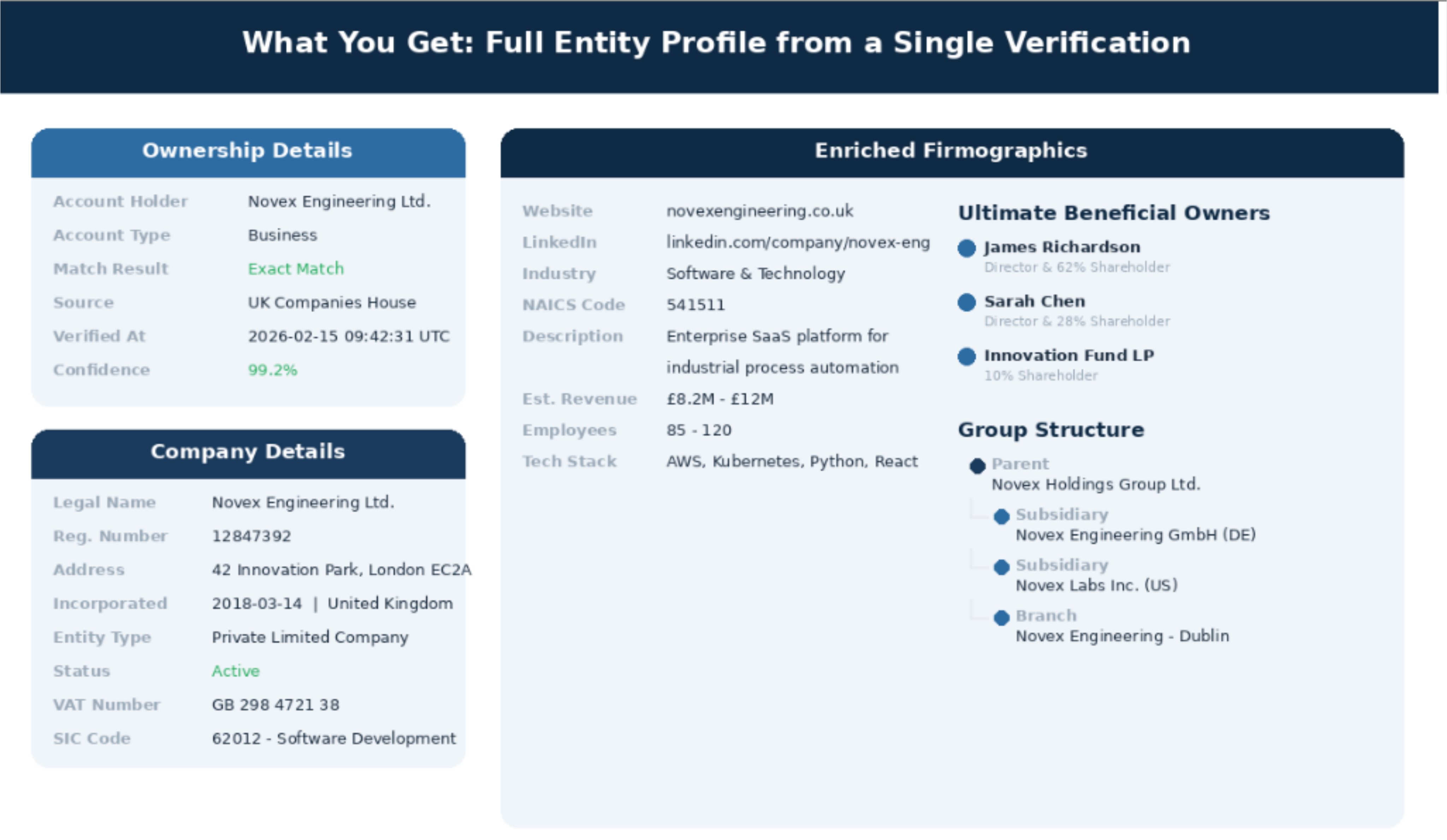
- Verified account holder name – matched against official records
- Account type – business or personal
- Match result with confidence score – exact, partial, or mismatch with fuzzy matching support
- Verification source and timestamp – for audit trail
- Company details (for business accounts) – legal name, registration number, address, incorporation date, company status, VAT number
- Enriched firmographics – industry codes, revenue estimates, employee count, website, social profiles, UBO, and group structure
Data Sources
MonitorPay pulls from 200+ trusted sources including government business registries in 100+ countries, partner banks and open banking APIs, credit bureaus and financial regulators, and proprietary enrichment systems. This multi-source approach ensures verification accuracy even in markets where a single data source may have gaps.
Integration Options
MonitorPay offers three access methods to fit different operational needs:
- REST API – for automated workflows including KYC/KYB, payouts, and onboarding flows
- Dashboard – for manual searches and PDF report generation
- Bulk file upload – CSV/Excel verification for processing large vendor lists
Most teams integrate the API in under one day. Responses are returned in structured JSON with sub-second latency.
Pricing
MonitorPay starts with 100 free checks. No credit card or subscription required. After that, usage-based pricing starts from €0.10 per check with volume discounts. No monthly minimums. Invoice at month-end based on actual usage.
Common Challenges and How to Solve Them
- Cross-Border Name Matching
Company names vary across jurisdictions. A German GmbH may appear differently in a UK banking system than in the Handelsregister. Effective verification requires intelligent matching that handles transliteration, abbreviations, legal suffixes, and character encoding differences. Look for providers with fuzzy matching and confidence scoring rather than simple string comparison. - Dormant and Closed Accounts
A valid IBAN can belong to an account that is dormant, closed, or frozen. Ownership verification alone does not catch this. The best verification workflows combine ownership confirmation with account status checks to ensure the account is both correctly owned and operational. - Regulatory Fragmentation
Different countries have different registry structures, data availability, and privacy regulations. A provider with genuine global coverage handles this complexity behind the scenes. You submit the same API call regardless of country. The provider manages the local data sourcing. - Balancing Speed and Thoroughness
Real-time payments demand real-time verification. But not every check can be resolved in milliseconds, especially in markets with limited digital infrastructure. The practical approach is to use instant API verification as the default, with manual review queues for edge cases and “Unable to Verify” responses.
Frequently Asked Questions
1. What is account ownership verification?
Account ownership verification confirms the legal owner of a bank account by cross-referencing account details against authoritative data sources such as government registries and banking records. It goes beyond format validation to confirm identity, not just account existence.
2. How is account ownership verification different from IBAN validation?
IBAN validation checks format, structure, and checksum. It confirms an IBAN could exist. Account ownership verification confirms who the account belongs to. IBAN validation catches typos. Ownership verification catches fraud.
3. What data sources are used to verify account ownership?
The strongest verification combines multiple sources: government business registries (legal source of truth for companies), banking partners (direct account holder confirmation), open banking APIs (regulated real-time access), and credit bureaus (cross-reference). Registry-based verification provides the highest reliability for B2B payments.
4. Can you verify both personal and business bank accounts?
Yes. Business accounts are typically verified against government registries and corporate databases. Personal accounts are verified through banking partners and open banking connections. The best providers handle both account types through a single API.
5. Is account ownership verification required by regulation?
The EU Verification of Payee (VoP) regulation, effective October 9, 2025, makes payee name verification mandatory for all Eurozone PSPs processing SEPA credit transfers. Non-Euro EU countries must comply by July 2027. Beyond VoP, KYB regulations in most jurisdictions require businesses to verify the identity and ownership structure of their counterparties.
6. How does MonitorPay verify account ownership?
MonitorPay connects directly to 200+ trusted data sources including government registries in 100+ countries, partner banks, and open banking APIs. When you submit an account for verification, MonitorPay cross-references the account holder’s identity against these sources and returns a structured result with match score, verification source, and timestamp.
7. Which countries does MonitorPay support for ownership verification?
MonitorPay supports account ownership verification in 150+ countries, covering all of Europe, the UK, and major markets globally. Coverage includes both company verification (via government registries) and individual account verification (via banking partners). Country-specific availability depends on local data access.
8. How long does an account ownership verification check take?
API-based verification typically returns results in under one second. Complex cases or markets with limited digital infrastructure may take slightly longer. Bulk verification for large vendor files processes thousands of records efficiently via CSV upload or batch API calls.
9. Can account ownership verification prevent invoice fraud?
Yes. Invoice fraud (including BEC and vendor impersonation) relies on tricking companies into paying accounts that don’t belong to the real vendor. Ownership verification catches this by confirming whether the account holder matches the expected payee. If the names don’t match, the payment is flagged before it executes.
10. How do I integrate account ownership verification into my existing payment workflow?
Most providers offer REST APIs with structured JSON responses. Integration typically takes less than a day. The standard approach is to call the verification API before authorizing a payment (especially for new vendors, large transfers, or changed bank details). Results can trigger automatic approval, manual review, or payment block based on your internal rules. MonitorPay also offers a dashboard for manual lookups and bulk file upload for batch processing.
Next Steps: Verify Account Ownership Before You Pay
MonitorPay combines IBAN validation, payee name matching, and account ownership verification in a single API, powered by data from 200+ official government registries and banking sources.
- Confirm legal account ownership across 150+ countries
- Verify both personal and business accounts
- Get enriched company data including registration, UBO, and group structure
- Monitor accounts for changes after verification
- First 100 checks free. No commitment required.